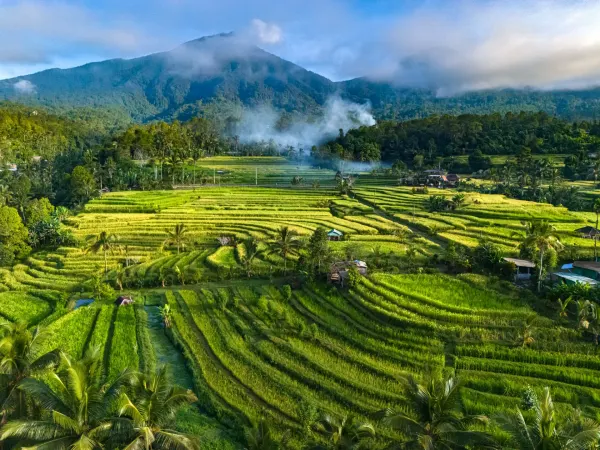
When international visitors gaze upon the sweeping, multi-tiered amphitheaters of Jatiluwih in Tabanan Regency, their first reaction is aesthetic awe. The rhythmic cascading terraces, framed by the volcanic slopes of Mount Batukaru, look like an exquisite giant stairway sculpted for the gods. Yet to reduce Bali’s rice fields to a scenic photo opportunity is to miss their true global significance. In an era of escalating climate disruption, catastrophic soil erosion, and severe droughts, the ancient Subak irrigation system represents one of the most resilient agro-ecological defense systems ever engineered by human civilization.
Inscribed as a UNESCO World Heritage site in 2012, Subak is not simply a farming technique; it is a thousand-year-old sociotechnical network integrating democratic water governance, mountain water temple worship at Pura Ulun Danu Beratan, and natural microclimate regulation. Here is an in-depth scientific analysis of why protecting Subak is vital for Bali’s ecological survival, how it actively combats climate change, and what is being done to shield it from rapid commercial overdevelopment.
1. The Ecological Architecture: How Terraces Mitigate Natural Disasters
Bali’s volcanic terrain is characterized by steep slopes, young volcanic soils, and intense tropical precipitation. Without sophisticated land management, heavy monsoonal cloudbursts would trigger catastrophic landslides and wash millions of tons of fertile topsoil straight into the ocean.
1. Kinetic Energy Absorption and Erosion Control
Each individual rice terrace is a precision-engineered aquatic retaining wall. As rushing rainwater cascades down the mountainside, the horizontal paddies act as stepped hydraulic brakes, absorbing the kinetic energy of the downpour. Rather than forming destructive flash torrents that rip through ravines, the water slows to a gentle crawl, allowing rich volcanic minerals to settle while preventing hillside soil collapse.
2. Natural Aquifer Recharge and Flood Buffer
Terraced rice paddies act as vast highland retention basins. By holding millions of cubic meters of standing water across mountain valleys, Subak fields allow rainwater to steadily seep into deep subterranean aquifers, recharging the groundwater table that feeds lowland rivers and community drinking wells. When developers pave over rice fields to build asphalt roads and concrete villas, this sponge effect disappears, resulting in devastating flash floods in urban areas like Denpasar and Seminyak.
3. Microclimate Cooling and Thermal Regulation
Covering thousands of hectares across central Bali, flooded paddies generate a powerful natural evaporative cooling effect. Climatological studies indicate that valleys maintained under active Subak cultivation experience ambient daytime temperatures 2°C to 4°C cooler than adjacent deforested or paved corridors, mitigating the heat-island effect naturally without energy-intensive air conditioning.
2. Biological Pest Control: Water Temples as Supercomputers
In the 1970s, Western agricultural modernizers forced Balinese farmers to adopt the "Green Revolution," demanding continuous year-round planting of hybrid rice and heavy chemical pesticides. Within three years, the system collapsed under catastrophic plagues of brown planthoppers and fungal blight. Why?
Groundbreaking computational research by anthropologist J. Stephen Lansing demonstrated that the ancient network of Water Temples was functioning as an indigenous biological supercomputer:
- Synchronized Fallow Flooding: At specific points in the ceremonial calendar, all farmers across an entire watershed coordinate to harvest their crops simultaneously and submerge their fields under standing water.
- Pest Starvation: Because there are no green stalks left to feed on, insect populations and field rodents starve and drown simultaneously across whole valleys without requiring a single drop of toxic chemical pesticide.
- Equitable Water Routing: Upstream farmers voluntarily surrender water during critical downstream seedling phases, maintaining communal harmony under the ancient democratic ethos of Tri Hita Karana.
3. The Looming Threats: Tourism Speculation and Canal Fracturing
Despite its proven ecological resilience, the Subak system faces severe modern pressures from commercial tourism development:
| Modern Threat | Direct Environmental Consequence | Impact on Farming Communities |
|---|---|---|
| Villa & Resort Encroachment | Permanent loss of agricultural topsoil; concrete walls block traditional gravity-fed bamboo canals. | Downstream farmers lose water rights, triggering cascading abandonment of adjacent plots. |
| Soaring Land Taxes (PBB) | Property taxes around tourist hotspots are reassessed at commercial rates rather than agricultural rates. | Generational farming families can no longer afford taxes on ancestral paddies and are forced to sell to developers. |
| Plastic & Chemical Runoff | Commercial garbage and untreated greywater from hospitality businesses seep into irrigation canals. | Contaminates organic rice crops and sickens heritage duck flocks that graze in paddies. |
4. Heritage Safeguards: Green Zoning and Tax Exemptions
To ensure that Subak survives for the next millennium, the Bali Provincial Government, UNESCO, and local customary councils (Desa Adat) have mobilized significant legal and fiscal protections:
1. Agricultural Land Protection (LP2B Zoning)
Under regional spatial planning laws (RTRW), primary Subak landscapes in Jatiluwih, Bedugul, and northern Gianyar are designated as Lahan Pertanian Pangan Berkelanjutan (LP2B)—permanently protected sustainable agricultural food zones where constructing private commercial villas, hotels, and tourist attractions is strictly outlawed.
2. Complete Property Tax Exemptions for Subak Farmers
In Tabanan Regency, farmers who actively cultivate heritage rice within the UNESCO core zone receive a 100% exemption from regional land property taxes (PBB), funded directly by tourism entrance ticket revenues and allocations from the Bali Tourist Levy.
3. Heirloom Red Rice Revival (Beras Merah Jatiluwih)
Farmers have successfully transitioned away from cheap hybrid commodity rice to cultivate traditional heirloom red rice (Beras Merah), which commands premium prices in organic health markets, farm-to-table restaurants, and luxury eco-resorts across the island.
5. How Travelers Can Visit Subak Terraces Respectfully
Walking through a working Subak terrace is an unforgettable cultural encounter. Follow these golden rules to respect the farmers and the land:
- Stay on the Ridge Paths (Galengan): Walk single-file along the elevated mud ridges. Never step into the flooded mud pools, which crushes delicate seedlings and breaks clay water barriers.
- Do Not Pollute the Water: Never drop cigarette butts, plastic wrappers, or sunscreen residue into running irrigation channels. Farmers and local children bathe and wash downstream.
- Pay the Official Entrance Ticket: In areas like Jatiluwih, paying the official admission ticket directly funds the local Subak cooperative maintenance treasury.
- Buy Direct from Farmers: Support local farming families by purchasing packaged heirloom red rice, raw forest honey, or fresh young coconuts from local roadside warungs.
6. Frequently Asked Questions (FAQ)
What is the difference between Jatiluwih and Tegallalang rice terraces?
Tegallalang (near Ubud) is smaller, steeper, and more heavily commercialized with zip-lines, swings, and cafes. Jatiluwih (in Tabanan) covers over 600 hectares, is a certified UNESCO World Heritage landscape, and represents a much quieter, authentic, and pristine working Subak farming cooperative.
What kind of rice is grown in Bali's Subak terraces?
Subak farmers cultivate white rice (Beras Putih), heirloom red rice (Beras Merah), and sacred glutinous black rice (Beras Injin), famous for its deep purple hue and rich ceremonial use in Balinese temple sweets.
How old is the Subak system?
Stone royal epigraphs discovered in Sukawana and Bebetin date the earliest documented Subak water cooperatives back to 882 CE—making Subak more than 1,140 years old!