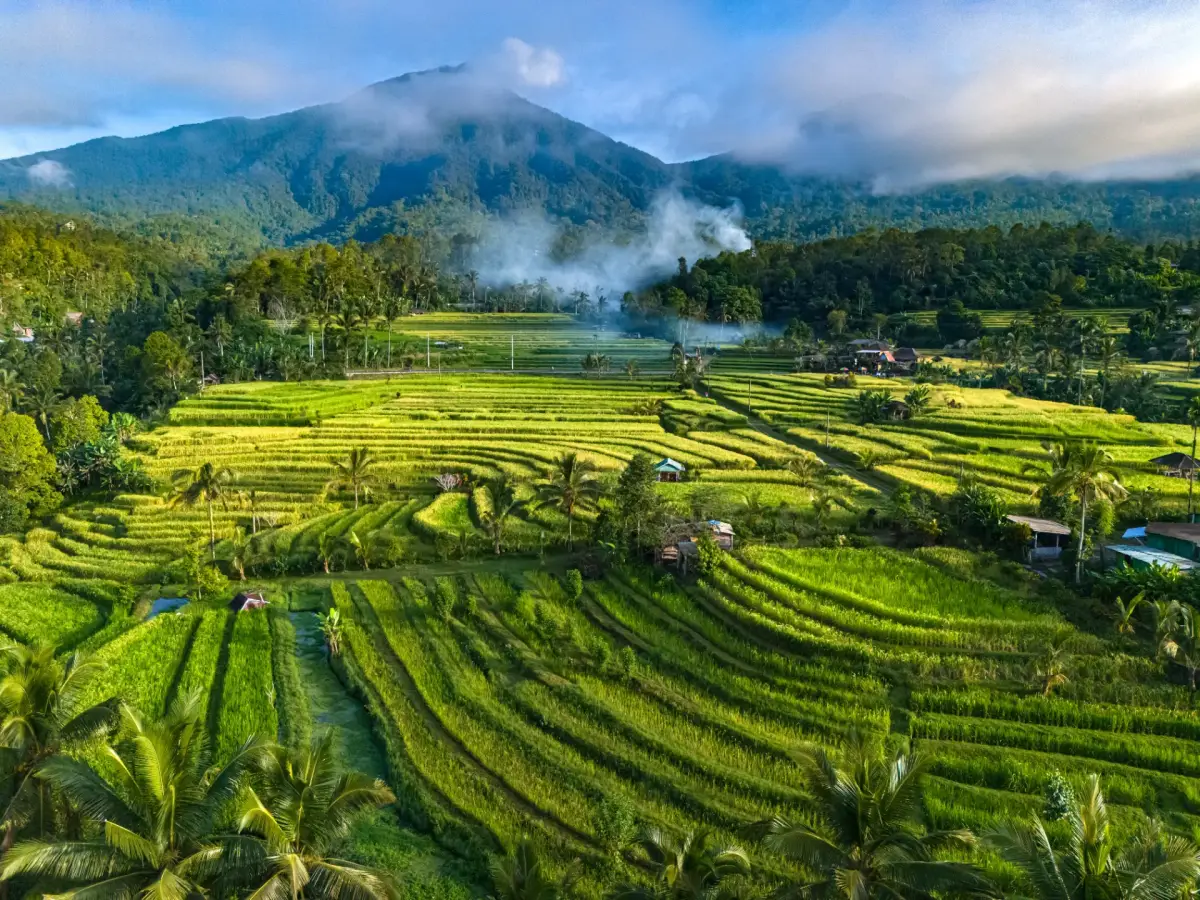
Since February 14, 2024, every foreign passport holder arriving on the Island of the Gods has been required by law to pay the Bali Foreign Tourist Levy—a one-time payment of IDR 150,000 (approximately $10 USD). As international travel taxes become common across global destinations like Venice, Bhutan, and Hawaii, travelers naturally ask a fair and vital question: “Is this just another bureaucratic government cash grab, or is my money actually funding real environmental and cultural preservation?”
Unlike ambiguous general airport departure taxes that disappear into national fiscal budgets, Bali’s tourist levy was enacted under strict legislative ring-fencing. Governed by Peraturan Daerah No. 6/2023 and Peraturan Gubernur No. 2/2024, 100% of the funds collected are legally bound to two explicit mandates: environmental protection and the preservation of ancestral Balinese culture. Here is the full, audited breakdown of where your IDR 150,000 goes, what tangible projects it funds, and how to verify your contribution.
1. The Legislative Mandate: Why Bali Enacted the Levy
For decades, Bali’s provincial budget struggled to cope with the infrastructure demands of over 5 million foreign visitors and 10 million domestic arrivals. Local Balinese taxpayers shouldered the burden of maintaining roads, clearing beach trash, and repairing sacred temple monuments strained by heavy tourism footfall.
The tourist levy re-balances this equation. Grounded in the indigenous philosophy of Tri Hita Karana, the levy invites visitors into an equitable social contract: travelers enjoy the natural beauty and spiritual serenity of Bali, and in return, contribute directly to its preservation. As explained in our guide to the Bali Tourist Levy, the program is branded under the official banner of the #BaliLegacyJourney.
2. The Budget Allocation: Where Does the Money Go?
According to official budget disclosures released by the Bali Regional Revenue Agency (Bapenda Bali) and the Provincial Tourism Board, revenue from the levy is allocated across three core operational pillars:
| Strategic Pillar | Budget Share | Funded Projects & Direct Outcomes |
|---|---|---|
| Waste Management & Environmental Protection | 50% | Construction of decentralized integrated waste processing stations (TPST), funding river barrier trash recovery teams, watershed reforestation in Kintamani and Bedugul, and groundwater aquifer recharge wells. |
| Cultural Heritage & Temple Preservation | 30% | Restoration of sacred stone shrines at mother temples like Pura Besakih, preservation of ancient palm-leaf manuscripts (Lontar), subsidies for traditional arts academies, and welfare support for village priests (Pemangku). |
| Tourism Infrastructure, Safety & Technology | 20% | Upgrading signage and medical clinics at major natural destinations, establishing multilingual tourist assistance booths, improving traffic management in Ubud and Canggu, and operating the digital Love Bali payment gateway. |
3. Tangible Environmental Projects Funded by the Levy
Foreign tourists can see the direct results of their levy contributions in concrete projects operating across the island today:
1. Decentralized Waste Processing (TPST Facilities)
Bali has historically relied on the massive open-air landfill at Suwung in South Denpasar, which suffered chronic subterranean fires and reached maximum capacity. Tourist levy funds are directly financing modern, enclosed Tempat Pengolahan Sampah Terpadu (TPST) facilities in Kesiman Kertalangu, Padangsambian, and Tahura. These modern plants use optical sorting and mechanical shredders to convert organic waste into high-grade agricultural compost and turn non-recyclable plastics into Refuse Derived Fuel (RDF) pellets for industrial kilns, diverting hundreds of tons of waste from landfills daily.
2. Watershed Protection and Highland Forest Restoration
Recharge waters in central Bali are critical to preventing the island-wide water crisis. Levy revenues subsidize the planting of thousands of native shade trees and bamboo in the critical volcanic calderas of Lake Batur and Lake Beratan, ensuring that monsoon rains recharge underground aquifers rather than washing topsoil into fragile lakes.
3. Coral Reef Protection in Nusa Penida and Menjangan
In high-traffic marine parks like Nusa Penida, levy funds finance ocean patrol boats that enforce no-anchor zones, install eco-friendly mooring buoys, and monitor responsible snorkeling practices around sacred Manta Ray feeding stations.
4. Preserving the Intangible Soul of Bali
Environmental health cannot be separated from cultural vitality. Without its vibrant Hindu ceremonies, sacred dances, and daily offerings, Bali would be just another tropical beach destination. The levy provides critical financial backing to safeguard living traditions:
- Conservation of Sacred Heirlooms: Restoring centuries-old wooden shrines (Pelinggih) and intricately carved royal split gates (Kori Agung).
- Traditional Weaving & Craft Subsidies: Supporting master weavers preserving ancient textile heritage, such as the double-ikat Gringsing of Tenganan and ceremonial gold-leafed silks worn in the classical Legong dance.
- Village Security & Decorum (Pecalang): Providing training and resources for local village customary security guards (Pecalang) who regulate traffic, protect ceremony processions, and ensure tourists observe traditional temple etiquette.
5. How to Pay the Bali Tourist Levy Safely and Avoid Scams
To ensure 100% of your funds reach the official government conservation trust, always pay through official, authorized channels:
Step-by-Step Payment Instructions
- Use the Official Portal: Visit the official government website at lovebali.baliprov.go.id or download the Love Bali App from Google Play or the Apple App Store. Avoid third-party commercial agency websites that charge inflated $25–$35 service fees!
- Enter Your Details: Input your full name (as written in your passport), passport number, arrival date, and an active email address.
- Complete Payment: Pay the exact IDR 150,000 fee using Visa, Mastercard, JCB, American Express, or Indonesian QRIS. Follow our detailed walkthrough on how to pay the Bali tourist tax online.
- Save Your Digital Levy Voucher: A digital QR-code voucher will be emailed to you instantly. Save this QR code on your smartphone to scan at arrival checkpoints at I Gusti Ngurah Rai International Airport or Benoa Harbor.
6. Frequently Asked Questions (FAQ)
Do children have to pay the Bali Tourist Levy?
Yes. The provincial regulation applies to all foreign passport holders regardless of age, including infants and children. However, diplomatic visa holders, KITAS/KITAP temporary and permanent residency holders, and student visa holders are legally exempt.
Is the Tourist Levy the same as the Indonesian Visa on Arrival (VoA)?
No! This is a frequent point of confusion for travelers. The Visa on Arrival (VoA) costs IDR 500,000 (approx. $35 USD) and is a national immigration fee paid to the central Indonesian government in Jakarta. The Tourist Levy is an independent regional fee of IDR 150,000 (approx. $10 USD) paid directly to the Provincial Government of Bali for regional conservation and culture.
Do I have to pay the levy again if I visit the Gili Islands or Lombok?
No. If you leave Bali temporarily to explore Lombok or the Gili Islands (which are located in West Nusa Tenggara Province) and return to Bali during the same trip, your original QR-code voucher remains valid until you permanently depart Indonesia.